
 Free Delivery & Return
 365-Day Returns
 10 Million Happy Customers
 500,000 Products in Stock


Outdoor Spa (41)


Outdoor SPA
Updated November 2026
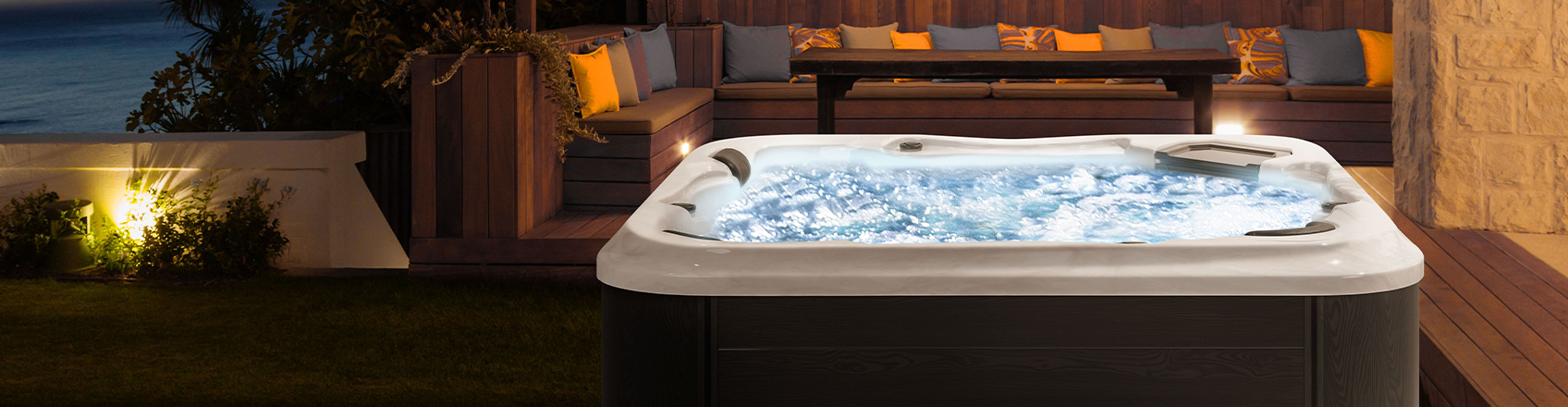
An outdoor spa turns part of the garden into a place for heat, massage and a cold rinse, used through the year rather than only on warm evenings. Two pieces do the work: a hot tub and an outdoor shower. What makes the difference between a setup that gets used and one that does not is where they stand, how they are supplied with power and water, and how much routine upkeep you are willing to take on.
What do you need for an outdoor spa at home?
An outdoor spa needs a heated tub for soaking and massage, an outdoor shower for rinsing before and after, and a level base that can carry the filled weight of both. Water weighs about 1 kg per litre, so a tub's filled weight is roughly its water capacity in kilograms, plus the weight of the tub itself and the people in it, and that figure decides whether a terrace, deck or balcony will take it. The tub needs a weatherproof power supply connected by a qualified electrician, while a solar shower runs from a standard garden hose. Keep the water between 36 and 38 °C for a comfortable soak, and never above 40 °C.
Where to put an outdoor spa in the garden: 5 things to plan
-
Firm, level base
The base comes first. A hot tub has to stand on a level, firm surface that carries its filled weight without shifting, such as a concrete slab, paving laid on a prepared sub-base, or decking built for that load.
A lawn is not a suitable base. Soil compacts unevenly under a static load, and a tub that settles out of level puts strain on the shell and the pipework.
-
Power, water and drainage
Next comes the distance to services. The tub needs a weatherproof power point within reach of its cable, the shower needs a hose connection, and both need somewhere for the water to go when you empty them.
-
Working space
Leave working space around the tub. You need room to lift the cover off and set it down, to reach the service panel, and to place steps on the side you enter from.
-
Shelter from wind
Shelter matters more than sun. Wind is what makes an outdoor soak uncomfortable the moment you stand up, so a hedge, a screen or a wall on the exposed side does more for year-round use than an open position.
-
Walk from the house
Finally, think about the walk from the house. In winter a short, non-slip route between the door and the tub decides whether the spa gets used in January or only in July.
Read more: creating a cool garden oasis
Which hot tub functions make the difference?
Comfort in an outdoor tub comes from two things: how the water moves against the body, and how the seat holds you while it does. Both come down to how the tub is built, which is where the practical differences between models sit.
Water jets
Pressure aimed at specific muscles
Water jets push a concentrated stream against the back, shoulders or legs, which is the setting to use after physical work or sport. The effect is firm rather than gentle, so it suits deep tension rather than a slow wind-down.
Air jets
Fine bubbles across the whole body
Air jets release bubbles through the floor and seats, spreading a light sensation over a wide area instead of targeting one spot. This is the milder of the two systems and the one most people use for a long evening soak.
Control panel
One place to set the session
A digital panel controls water temperature, massage intensity and the colour of the underwater lighting. Check whether the three can be set separately, since that is what lets one tub serve both a morning soak and a late evening one.
Seating
Profiled seats and headrests
Curved seats follow the line of the back so the body stays supported without bracing against the shell. Soft headrests keep the neck in a neutral position, which is what makes a longer session comfortable rather than stiffening.
Heating and winter use
An integrated heater holds the water at the temperature you set, so the tub stays usable when the air is cold and a soak in falling snow becomes practical rather than theoretical.
The cover does as much work as the heater. Heat leaves through the water surface, so an insulated cover closed between sessions is the single most effective way to keep running costs down in winter.
Lighting and evening use
Underwater LED lighting lets you set the mood of the water itself, from a single soft colour for a quiet evening to a changing sequence when the spa is the centre of a garden gathering.
Lighting around the tub is a separate job. Low-level light on the path and the steps is what makes the area safe to walk on in the dark, and it does not have to be bright to do that.
Keep the water at 40 °C or below
The recommended maximum water temperature for a hot tub is 40 °C, and at that setting a single session should be limited to roughly 15 minutes. Step out sooner if you feel dizzy or light-headed. Anyone who is pregnant or has a heart condition or high blood pressure should ask a doctor before using a hot tub at all.
36-38 °C
Comfortable for a soak
38-40 °C
Hot: about 15 minutes at 40 °C
Above 40 °C
Never
Shop now: outdoor hot tubs
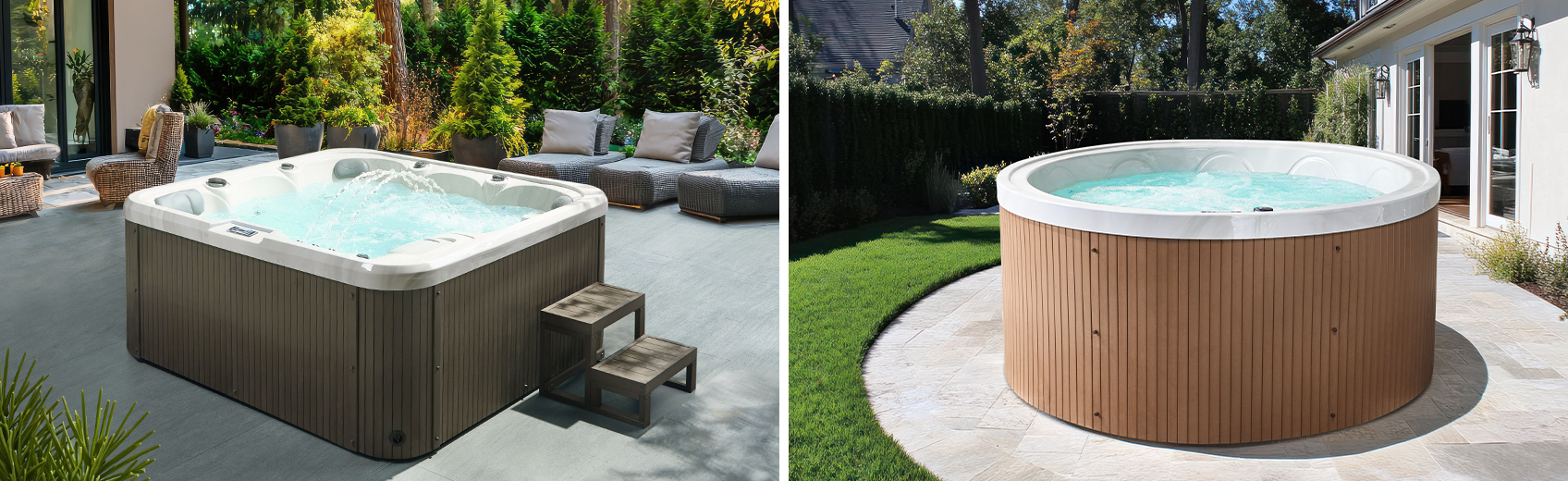
Why add an outdoor shower to the spa area?
A shower completes the cycle around the tub. It gives you a rinse before you get in and a way to cool down after the heat, and in summer it works on its own after the garden, the beach or the pool.
Rinsing before you bathe is the part that pays off twice. Sun cream, body oils and sweat all end up in the water otherwise, where they feed cloudiness and increase how much sanitiser the tub needs.
Solar heating
Warm water without wiring
An integrated tank holds the water in the sun until it warms, so the shower needs no electrical connection at all. Output depends on sunshine, which makes it a summer and shoulder-season fixture rather than a winter one.
Rainfall head
A wide, even flow
A large-format head spreads the water across the shoulders instead of concentrating it in one stream. That is the format to choose if the shower is mainly for cooling down rather than washing hair.
Mixer tap
Control over the temperature
A mixer blends solar-heated water with the cold supply, so you are not limited to whatever the tank has reached that day. Without one, the shower runs at a single temperature you cannot adjust.
Foot wash
A lower tap for feet
A second tap near the base rinses grass, sand and garden debris off the feet before anyone steps into the tub or back into the house. It is the feature that keeps the water clear between full changes.
Installation is straightforward, since these showers connect to a standard garden hose and can stand anywhere the hose reaches. Think about drainage all the same: a shower used daily puts a steady amount of water into the same patch of ground, so gravel, paving or a planted bed handles it better than a lawn.
Shop now: outdoor showers
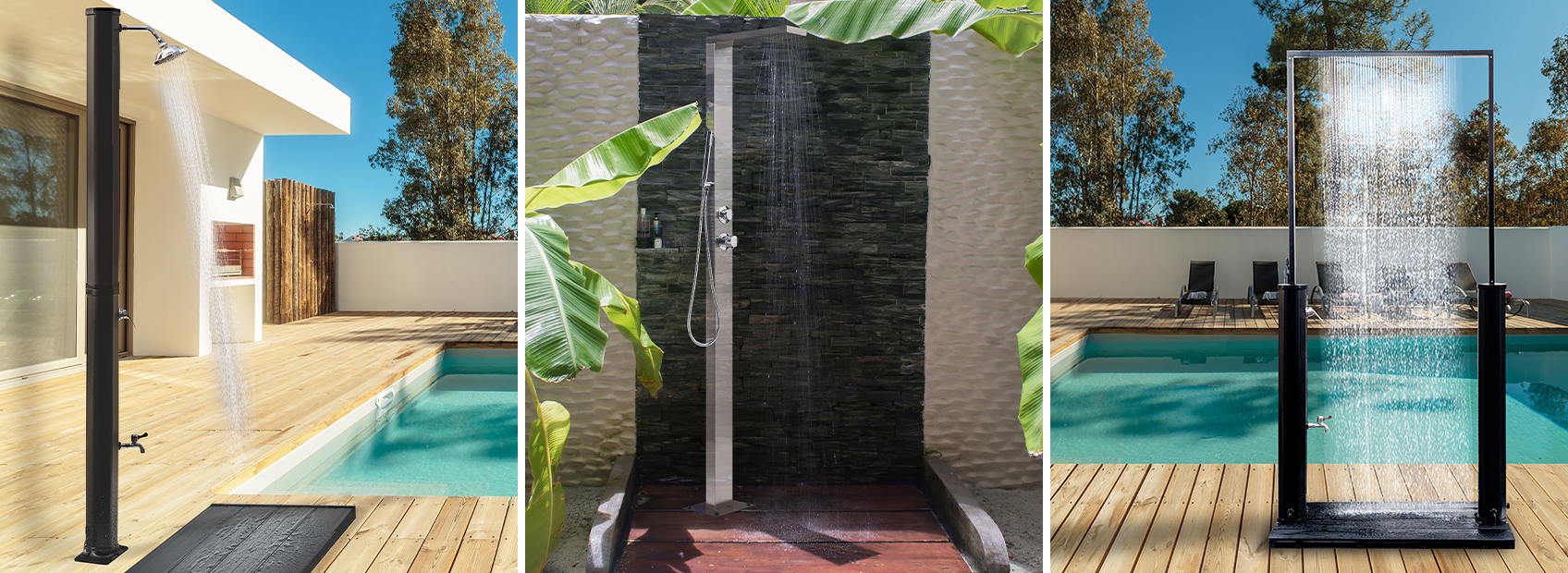
How to care for an outdoor spa through the year
Materials do part of the work. Our outdoor showers are built from a combination of PVC and zinc, which resists corrosion from constant contact with water, and a fitted cover protects the tub shell and its digital components from rain, sun and falling leaves.
2-3 times a week
Test the water with a kit or strips
Every 1-2 weeks
Rinse the filter cartridge
Every 3-4 months
Drain, clean and refill the tub
About once a year
Replace the filter cartridge
Water care
Test the water two to three times a week with a test kit or strips. Keep the pH between 7.2 and 7.6, since readings outside that range reduce how well the sanitiser works and make the water more likely to irritate skin and eyes.
Free chlorine in a hot tub is usually kept between 3 and 5 mg/l, which is higher than in a swimming pool because the water is warmer and the volume is smaller. Follow the dosing instructions supplied with your own chemicals, as concentrations differ between products.
Drain, clean and refill the tub every three to four months under normal household use, and sooner if several people use it regularly.
Filters and covers
Rinse the filter cartridge under clean water every one to two weeks, and replace it about once a year or whenever rinsing no longer restores it. A clogged filter is the usual reason water turns cloudy while the chemical readings still look correct.
Close the insulated cover whenever the tub is not in use. It holds the heat in, keeps debris and rain out, and keeps children out of the water when no one is watching.
Frost and winter
If you bathe through winter, leave the tub running and covered rather than switching it off between sessions, as reheating a cold tub uses more energy than holding the temperature.
If you close the spa down instead, empty it completely, including the pipework and the shower's solar tank. Water left inside expands as it freezes, and that is what splits fittings over winter.
What to check before buying
Work through these in order, starting with the one that cannot be changed later: the surface the tub will stand on.
- The filled weight in the specification against what your slab, deck or balcony is rated to carry
- Whether a weatherproof power point is within reach of the tub's cable, or whether an electrician needs to add one
- The number of seats you will genuinely use at once, rather than the maximum the tub can hold
- Whether the control panel sets temperature, massage and lighting separately
- Whether an insulated cover is included or has to be bought separately, if you plan to bathe in winter
- Where several hundred litres of water will drain to, and whether that spot can take it three or four times a year
- For the shower, whether it has a mixer tap and a foot wash, and whether it can be drained easily before the first frost
Frequently asked questions
Can you put an outdoor hot tub on a balcony or roof terrace?
Only if the structure is rated for the load. Water weighs about 1 kg per litre, so a 1,000-litre tub holds a tonne of water before you add the weight of the tub itself and the people in it. Have the stated load capacity of the balcony or terrace checked by a structural engineer or the building management before you buy. A ground-level concrete or paved base avoids the question entirely.
How long does a hot tub take to heat up?
From a cold fill, expect several hours: anywhere from about three to twelve, depending on the size of the tub, the starting water temperature and the weather. A more powerful heater warms the water faster, so check the heater rating in the specification. Fill the tub the day before you want to use it for the first time and keep the cover closed while it heats. Once the water is up to temperature, reheating after a soak is quicker than starting from cold.
Can children use an outdoor hot tub?
Children under five should not use a hot tub at all. Older children can, but only for much shorter sessions than adults and at a lower water temperature, and always with an adult present. Keep the cover closed and secured whenever the tub is not in use.
Is it safe to drink alcohol in a hot tub?
It is best avoided. Alcohol and hot water both widen the blood vessels and can lower blood pressure, so together they raise the risk of dizziness, fainting and drowning. Health agencies advise against drinking before or during a soak. Keep a bottle of water within reach instead, and avoid soaking alone if you are tired or unwell.
Why is the water in my hot tub cloudy or foamy?
The usual causes are a dirty filter, a pH or sanitiser level outside the correct range, soap residue from swimwear or lotions and oils carried in by bathers, or water that has been in the tub too long. Rinse the filter, test the water and bring the pH back to between 7.2 and 7.6, and rinse off sun cream and body oils in the shower before you get in. If the water stays cloudy or foamy while the readings are correct, drain, clean and refill the tub.
How long does a solar shower take to warm up?
In direct summer sunshine, allow around three to four hours, and longer on a cool or windy day. Fill the tank in the morning so the water is warm by the afternoon. The water can get hotter than you expect, so test it by hand before stepping under, and if your shower has a mixer tap, blend in cold water until it feels comfortable.